Choosing the right wire gauge is the single most important electrical specification that decides whether a cable assembly runs safely or quietly overheats in the field. Too thin, and the conductor exceeds its temperature rating under load; too thick, and you pay for copper and flexibility you never needed. This B2B buyer’s guide explains how wire gauge (measured in AWG in North America and mm² in much of the world) affects current capacity, voltage drop, and total landed cost — so you can brief your cable manufacturer with numbers instead of guesswork.
Why Wire Gauge Decides Cable Safety
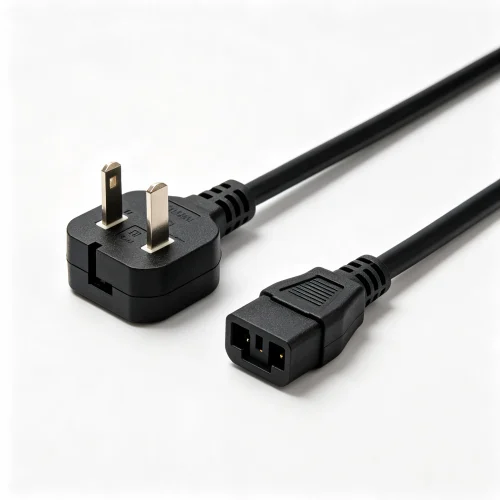
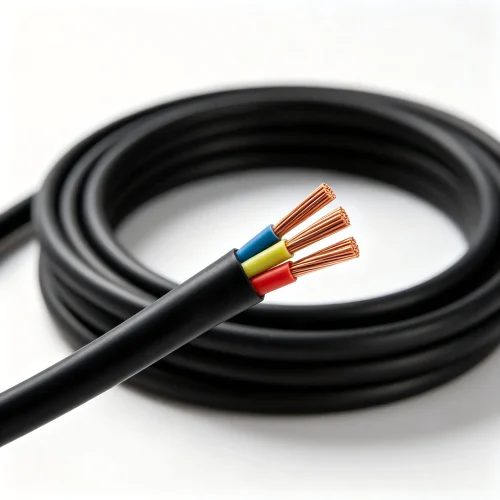
Wire gauge defines the cross-sectional area of a conductor. A smaller gauge number means a thicker conductor and a higher current it can carry without overheating. In industrial and commercial cable assemblies, the gauge is what keeps a power cord, a USB-C harness, or a serial communication loom inside its safe operating temperature. Specifying the gauge from the actual load — not from habit — prevents nuisance tripping, insulation damage, and, in the worst case, fire. For B2B buyers, the gauge is also the first line item a competent manufacturer will question on an RFQ.
Understanding the Wire Gauge (AWG) Scale
The American Wire Gauge (AWG) system is logarithmic: every three steps roughly doubles or halves the cross-sectional area. That means 18 AWG is not “a little thinner” than 12 AWG — it carries far less current. The table below gives reference diameters and ampacity for the sizes B2B buyers specify most often.
| AWG | Diameter (mm) | Reference ampacity* (A, free air ~20°C) | Typical B2B use |
|---|---|---|---|
| 10 | 2.59 | 55 | Heavy equipment feeds, large power cords |
| 12 | 2.05 | 41 | High-current appliance and tool cords |
| 14 | 1.63 | 32 | General-purpose power cords, lighting |
| 16 | 1.29 | 22 | Electronics, monitor and printer cables |
| 18 | 1.02 | 16 | DC power, USB-C and adapter cabling |
| 20 | 0.81 | 11 | Signal + light power, internal wiring |
| 22 | 0.64 | 7 | Control and communication signals |
| 24 | 0.51 | 3.5 | Sensor, RS485 and data pairs |
*Reference values for a single insulated conductor in free air. Actual ampacity depends on insulation, bundling, ambient temperature, and raceway; confirm against UL / IEC tables for your installation.
Outside North America, gauges are usually stated in square millimetres (mm²). A quick conversion reference: 18 AWG ≈ 0.75 mm², 16 AWG ≈ 1.0 mm², 14 AWG ≈ 2.0 mm², 12 AWG ≈ 3.0 mm², 10 AWG ≈ 4.0–6.0 mm². Always confirm the exact figure with your supplier, because national standards (IEC vs AWG) differ slightly in strand construction and rating method.
How to Size Wire Gauge for Your Application
Follow a simple four-step loop when you specify gauge:
- Calculate the load current. Sum the worst-case draw of every device on the circuit.
- Add a safety margin. Most engineers derate to 70–80% of the conductor’s rated ampacity for continuous loads.
- Check the run length. Longer runs need a thicker gauge to keep voltage drop in spec.
- Confirm the environment. Bundled, enclosed, or high-ambient routes need further derating.
Voltage Drop: The Hidden Reason to Go Thicker
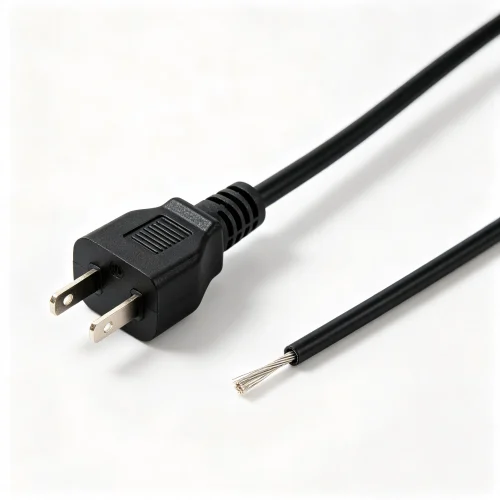
Even when a gauge carries the current safely, a long thin run wastes energy and starves the device at the far end. A common rule of thumb is to keep voltage drop under 3% for power circuits and under 5% for the combined feeder and branch. Voltage drop scales with current and distance and falls as the cross-section rises, so the fix is usually to step up one or two gauges rather than accept a weak, hot-running cable. For DC installations in particular — such as long power cords and power cables runs — drop is often the binding constraint, not raw ampacity.
Common Wire Gauge Mistakes in B2B Orders
- Copying a competitor’s BOM blindly. Their environment is not yours; re-verify the load.
- Ignoring strand count. A flexible assembly needs fine stranding even at the correct gauge.
- Forgetting derating. A gauge that is fine in free air can overheat inside a bundled loom.
- Mixing AWG and mm² without conversion. Always state the target standard on the RFQ.
Wire Gauge Across Our Product Lines
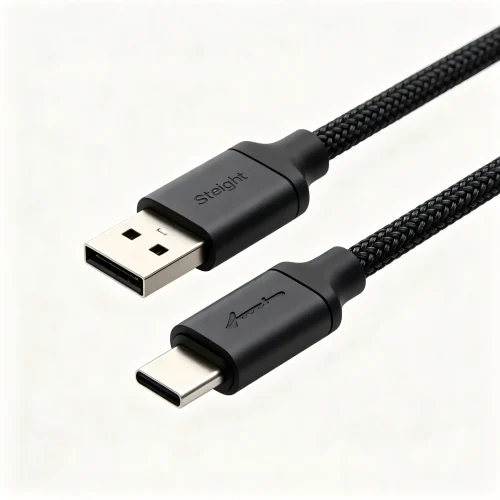
The same gauge logic applies whether you are ordering power cords and power cables, USB-C cable assemblies, or serial and industrial communication cables. Tell us the load, length, and certification, and we select the conductor gauge that meets both safety and budget. For the underlying formulas and the full logarithmic definition, see the American wire gauge reference on Wikipedia.
Get a Specification Review
Wire gauge is a trade-off between safety, flexibility, and cost — not a number to guess. Send us your load profile, run length, and target certifications (UL, CE, REACH, RoHS), and our engineering team will recommend the correct gauge and build a sample for testing. Contact our engineering team to start a specification review or request a quote.