

The global industrial Ethernet cable market is projected to reach USD 11.2 billion by 2030, growing at a CAGR of 7.4% from 2026, driven by the widespread adoption of Industry 4.0, smart manufacturing and edge computing infrastructure across manufacturing, logistics and energy sectors. As networks carry more data and operate in harsher environments, cable specifications are evolving rapidly.
Below are 4 key trends reshaping industrial Ethernet cable design and sourcing decisions.
1. CAT6A displaces CAT5e as the industrial baseline
For many years, CAT5e was the standard for industrial field networks. Today, however, CAT6A is rapidly becoming the minimum specification for new installations. The shift is driven by higher bandwidth requirements for machine vision, motion control and IoT sensor data, as well as the need for future-proof infrastructure that can support 10Gbps transmission over longer distances. This transition is accelerating as component costs continue to fall and system integrators standardize on higher-performance cabling.
SYY’s industrial CAT6A cable portfolio is engineered to meet this baseline shift, delivering consistent 10Gbps performance even in high-interference environments.
2. Double shielding moves from premium to standard
Single-shielded (FTP) cables were once sufficient for most industrial settings, but rising EMI levels from dense automation equipment are pushing the market toward double-shielded (SFTP) construction as the default. Aluminum foil provides individual pair shielding, while an overall braided copper shield adds a second layer of protection. This combination virtually eliminates crosstalk and signal interference, reducing unplanned downtime and data transmission errors.
This trend mirrors the broader evolution of our industrial serial communication cables, where double shielding has long been the standard for field deployments.
3. Pre-terminated assemblies reduce installation time and risk
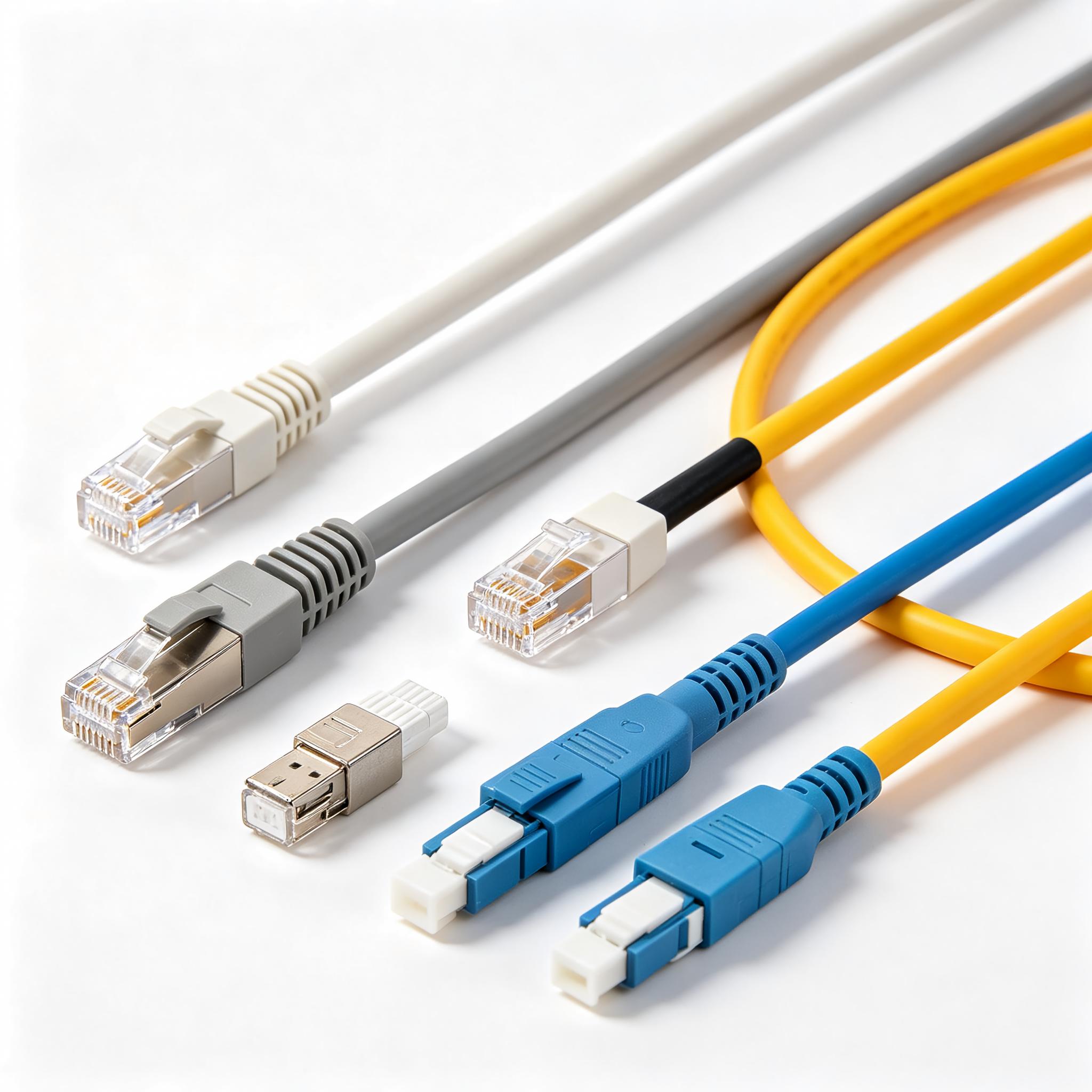
More engineering and procurement teams are moving away from field-terminated bulk cable. Instead, they are sourcing factory-pre-terminated, fully tested Ethernet cable assemblies. Pre-terminated cables deliver consistent quality, eliminate on-site tooling and labor costs, and reduce installation time by up to 60%. This shift is particularly strong in large-scale factory projects and greenfield installations where schedule reliability is critical.
4. Hybrid power-data cables simplify field wiring
As field devices become more compact, there is growing demand for hybrid cables that carry both Ethernet data and DC power over a single run. These cables reduce cable count, simplify tray routing and lower installation complexity for edge sensors, IP cameras and IoT gateways. Manufacturers that can design and produce custom hybrid assemblies are gaining a strong competitive advantage in this fast-growing segment.
For industrial sourcing teams, the takeaway is clear: industrial Ethernet cabling is no longer a commodity. Selecting a supplier that understands both electrical performance and industrial application requirements will be key to building reliable, future-proof network infrastructure.
Stay tuned to the Industry News category for more market updates and technical insights.






















一个回复