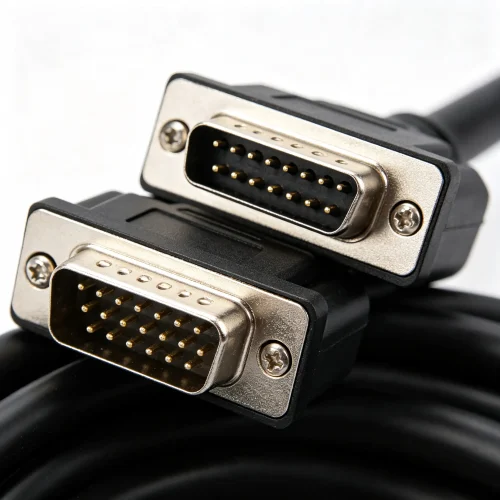
A shielded cable uses a conductive barrier—typically braided copper or aluminum foil—wrapped around its conductors to block electromagnetic interference (EMI) that can corrupt data and control signals in industrial environments. If you have ever seen a sensor drop out next to a variable-frequency drive, or a video feed develop rolling bars near a motor, you have seen what happens when shielding is missing or wrong. This guide explains when a shielded cable beats an unshielded one, compares the main shield constructions, and gives B2B buyers a practical checklist for specifying the right cable the first time—before a noisy install turns into a field return.
Shielded Cable vs Unshielded Cable: Key Differences
The only structural difference is the shield: an unshielded cable relies on twisting and spacing alone to reject noise, while a shielded cable adds a continuous conductive layer that diverts interference to ground. That single layer changes three things that matter to buyers—noise immunity, cost, and physical flexibility.
- Noise immunity: A shield can cut coupled interference by 20–40 dB versus an unshielded equivalent, which is often the difference between a clean signal and a dropped packet on a factory floor.
- Cost: Shielding adds material and a drain wire or foil contact, typically raising cable cost by 10–30% and sometimes more for double-shielded designs.
- Flexibility: Braided shields stay flexible; foil shields are thinner and lighter but can crack under tight, repeated bending.
Types of Cable Shielding
Braided Shield
A braided shield is woven from bare or tinned copper strands. It offers excellent flexibility and mechanical strength, survives millions of flex cycles in drag chains, and handles high-frequency noise well. Its weakness is coverage—typically 70–95%—leaving small gaps that low-frequency fields can enter. Buyers choose braid when the cable must bend thousands of times.
Foil Shield
A foil shield is a thin aluminum or polyester-aluminum laminate that wraps 100% of the cable. It gives the best low-frequency and broadband coverage for the lowest cost, but it is fragile: foil tears if flexed sharply or repeatedly, so it suits static or lightly-flexed runs such as panel wiring and fixed tray routes.
Combination (Braid + Foil) Shield
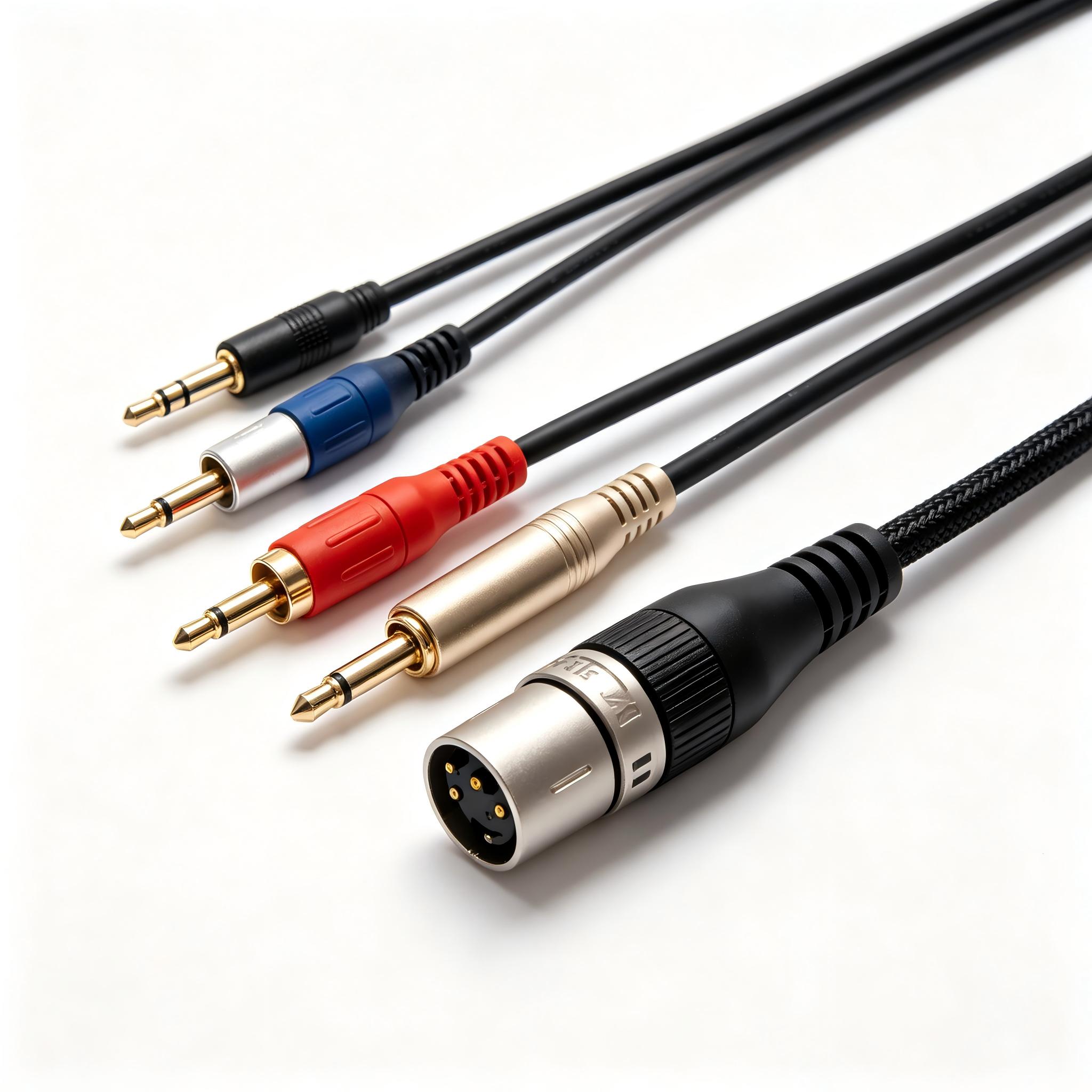
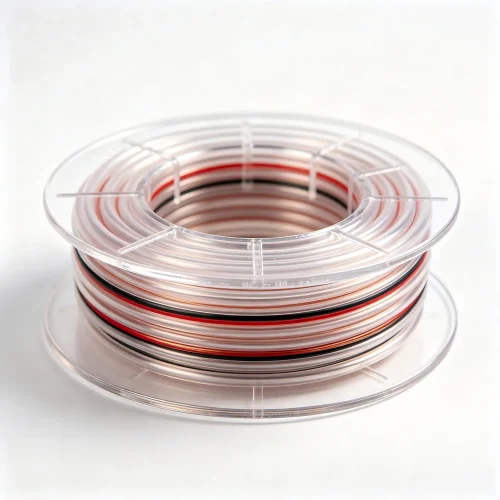
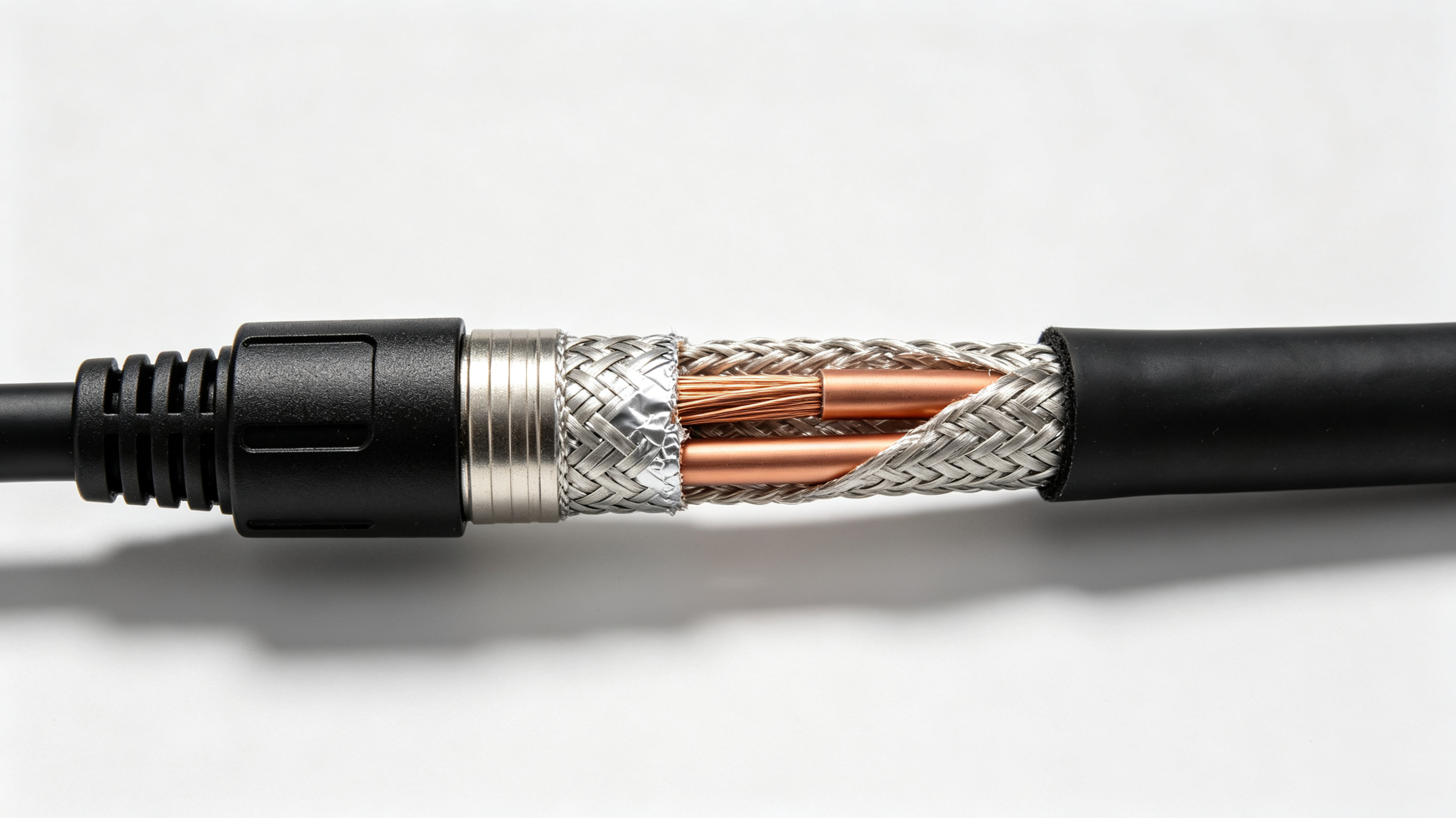
A combination shield pairs a foil layer for full coverage with a braid for strength and high-frequency performance. This dual approach—visible on our industrial audio assemblies—delivers the strongest immunity and is the default for harsh, mixed-noise environments such as robotics cells and broadcast racks where both broadband hum and RF splash are present.
Shield Construction Comparison
| Shield type | Typical coverage | Flex life | Relative cost | Best for |
|---|---|---|---|---|
| Unshielded (UTP) | None | High | Lowest | Clean, short, low-noise runs |
| Foil (FTP) | ~100% | Low | Low–Medium | Static installs, broadband noise |
| Braided (STP) | 70–95% | High | Medium–High | Drag chains, repetitive flex |
| Braid + foil | ~100% | Medium–High | High | Harsh mixed-noise environments |
When Do You Actually Need a Shielded Cable?
Not every run needs shielding, and over-shielding wastes budget. Use this checklist to decide:
- Is the cable routed within ~30 cm of drives, contactors, relays, or radio transmitters? → Shield.
- Does it carry low-level analog, RS-485, or high-speed data (Ethernet, USB, video)? → Shield.
- Is the environment certified to EMC limits (CE, FCC) or in a medical/automation setting? → Shield and ground properly.
- Is the run short, fixed, and far from noise sources? → Unshielded may be fine.
Shield-to-Application Selection Table
| Application | Recommended shielding | Why |
|---|---|---|
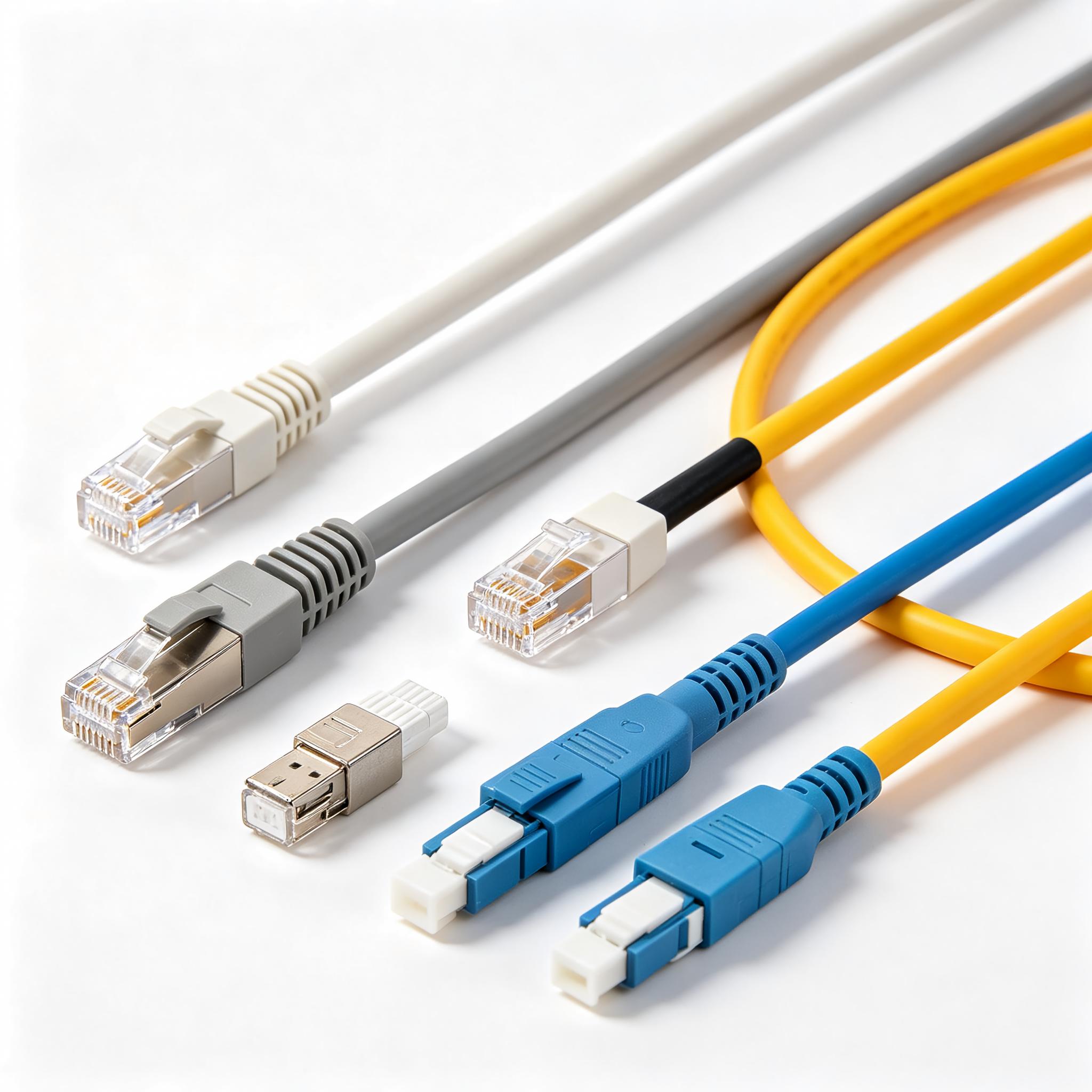
| Industrial Ethernet / PROFINET | Foil or braid+foil | High-speed data near VFDs |
| RS-485 fieldbus in panels | Foil or braid | Differential signal still needs EMI guard |
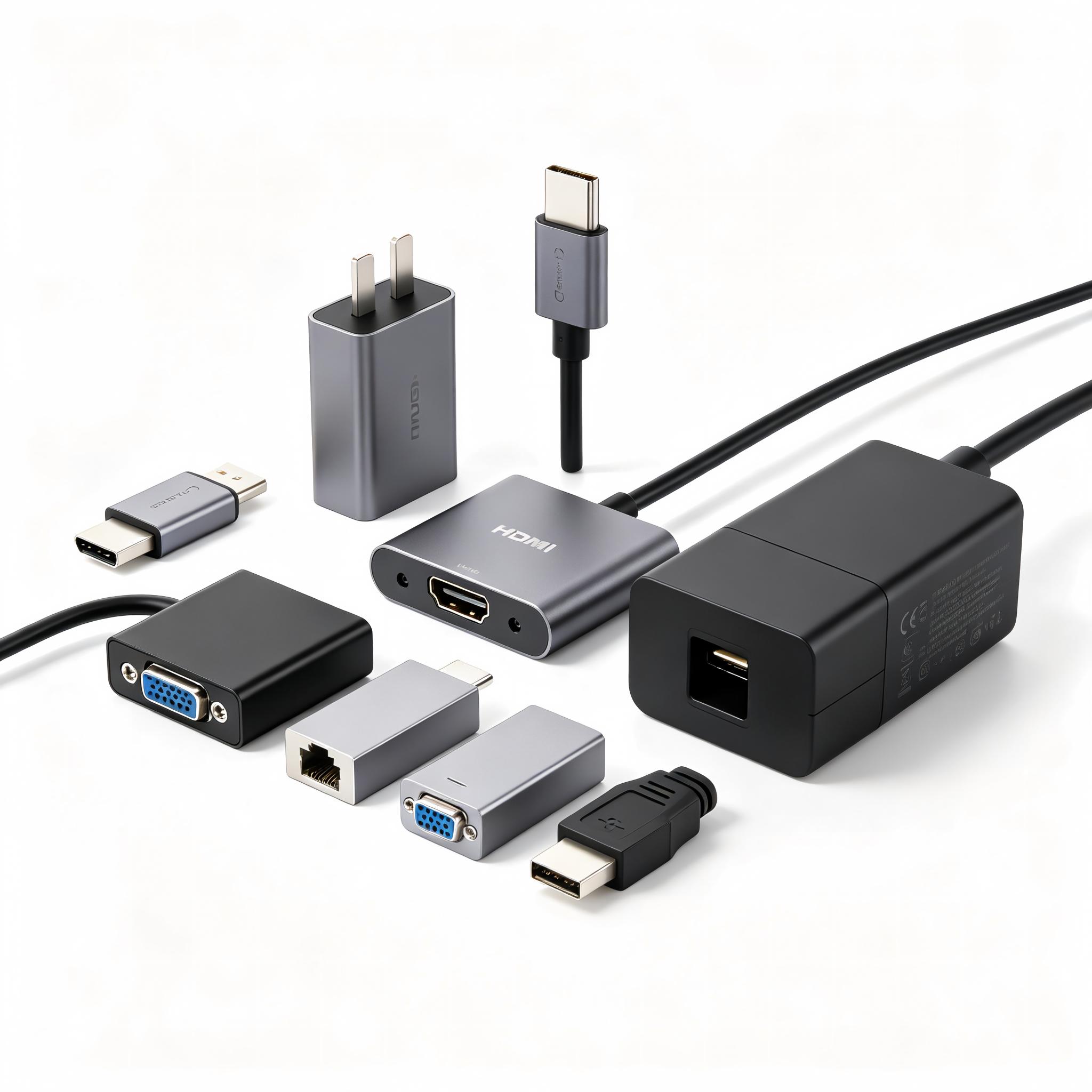
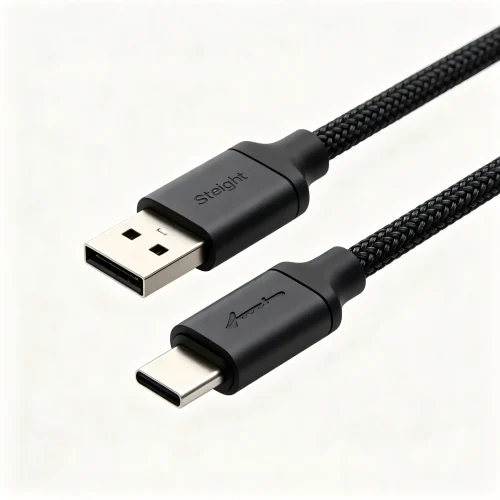
| USB-C device links | Foil (integrated) | High-speed serial, tight EMC rules |
| Balanced XLR audio | Braid + foil | Broadband + RF rejection on stage/rack |
| Static power feed | Usually none | Low-noise path, cost priority |
Grounding and Drain Wires: The Part Buyers Forget
A shield only works if it is terminated. Connect the drain wire or shield jacket to a clean ground at one end (sometimes both, via a capacitor, to avoid ground loops). A floating shield is decorative. Specify shield termination and connectors in your RFQ so the assembly arrives tested, not just shielded on paper. For foil shields, also require a 360° circumferential termination at the connector rather than a single pigtail—a pigtail leaves a gap at high frequencies where the shield stops working.
Common Mistakes When Specifying a Shielded Cable
- Specifying foil for a bending drag-chain run. Foil cracks under repeated flex; choose braid or braid+foil instead.
- Leaving the shield unterminated. An ungrounded shield provides almost no benefit—termination is where the work happens.
- Grounding both ends without isolation. This creates a ground loop that injects noise; use one solid ground plus a high-frequency capacitor at the second end.
- Assuming unshielded is “good enough” near drives. VFDs and contactors are among the noisiest sources in any plant; shield the nearby signal lines.
- Mixing shielded and unshielded in one tray with no separation. Keep noisy and sensitive pairs apart, or the shield on the quiet pair does little.
Choose the Right Shielded Cable for Your Application
Shenzhen Shiyueyun Technology Co., Ltd. (SYY Cable) builds shielded assemblies across its catalog. Explore the right family for your signal:
- Industrial Ethernet & fiber cables — foil and braid+foil CAT6A for PROFINET and Ethernet.
- Serial & industrial communication cables — shielded RS-485/RS-232 for noisy panels.
- USB-C cables — shielded high-speed links for devices and chargers.
- Audio cables — dual-shielded balanced XLR and line cables.
For the underlying physics of interference and coupling, see the overview of electromagnetic interference on Wikipedia.
Get a Shielded Cable Quote
Need a shielded cable specified for your exact noise environment, flex cycle, and certification? Contact the SYY Cable engineering team with your application and we will return a tested, properly-terminated assembly recommendation.