

The global industrial Ethernet market is projected to reach USD 42.6 billion by 2030, growing at a CAGR of 7.8% from 2026, driven by smart manufacturing, IIoT deployment, robotic automation and the migration from traditional fieldbus systems to faster Ethernet-based networks.
North America, Europe and Asia-Pacific remain the three most important regional markets, each with different adoption patterns. Asia-Pacific leads in manufacturing volume and IIoT rollout, Europe maintains strong demand through Industrie 4.0 and German automation projects, while North America benefits from reshoring, modernization and smart factory investments.
Below are 4 key trends shaping industrial Ethernet connectivity in 2026.
1. Higher Bandwidth Becomes Essential for Machine Vision and Robotics
Industrial networks are moving far beyond simple PLC communication. Today’s machines require high bandwidth for:
- Machine vision cameras
- Robotic control data
- Edge computing nodes
- Wireless access points
- Large volumes of sensor data
CAT6A and higher-grade industrial Ethernet cables are becoming the new baseline for many factory network backbones, especially where 10 Gbps and multi-Gbps equipment is deployed.
2. IIoT Expansion Creates More Connection Points
The number of connected industrial devices continues to grow rapidly. By 2026, IIoT networks are connecting not only controllers and drives, but also sensors, meters, cameras, RFID readers and edge gateways.
This expansion increases demand for:
- Industrial-grade structured cabling
- Shielded cable systems
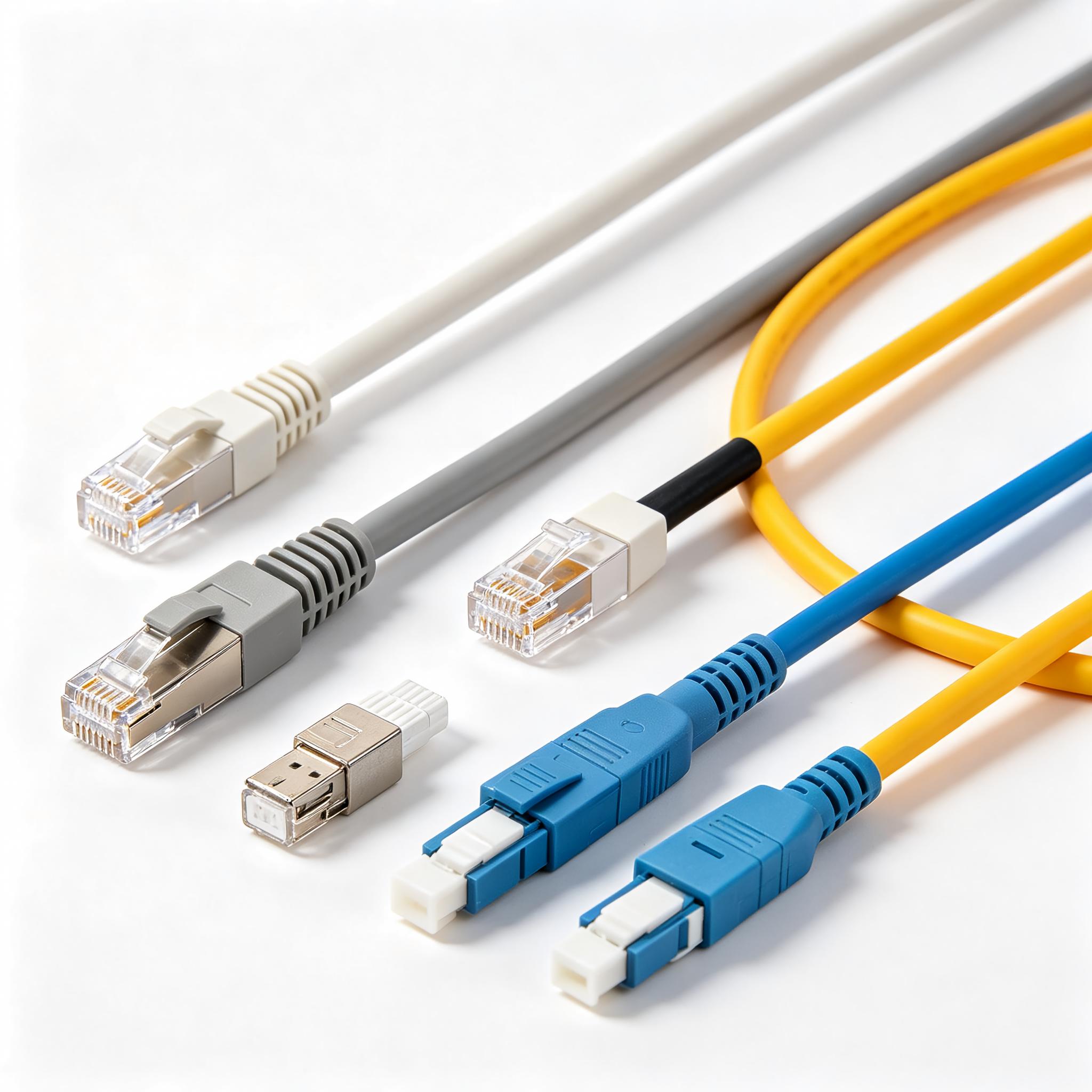
- Reliable patch cords
- Standardized connectivity components
- Better documentation and traceability
Industrial Ethernet is no longer just a control network; it is becoming the nervous system of the smart factory.
3. Edge Computing Changes Network Architecture
Edge computing is moving data processing closer to the machine and the factory floor. Instead of sending all information to a central cloud, industrial edge devices process time-sensitive data locally, reducing latency and improving real-time performance.
This shift creates new cabling requirements for:
- High-speed backhaul between edge nodes
- Low-latency connections
- Stable EMI protection
- Ruggedized industrial cables
- Consistent network performance across the plant
Cable infrastructure must now support both operational reliability and digital transformation.
4. Ruggedized Cabling Moves from Optional to Standard
Factory environments are tougher than office networks. Industrial cables face mechanical stress, oil, moisture, temperature variation and electromagnetic interference.
For this reason, ruggedized industrial Ethernet cables are no longer premium options. They are now standard for:
- Robotic cells
- Machine tools
- Conveyor systems
- Outdoor installations
- Food and beverage areas
- High-interference manufacturing zones
Shielded construction, industrial jackets and regional certification are increasingly required as part of the basic specification.
Key Takeaway for Sourcing Teams
Industrial Ethernet connectivity in 2026 is being reshaped by higher bandwidth, IIoT growth, edge computing and ruggedization. For procurement and engineering teams, the priority is no longer just buying standard network cables, but selecting cable infrastructure that can support long-term factory network evolution.
Working with a supplier that understands industrial performance, regional compliance and custom connectivity requirements will help ensure more reliable and future-ready industrial network systems.
Stay tuned to the Industry News category for more industrial connectivity trends and technical sourcing guides.



























2 Responses