
Selecting the right cable jacket material is one of the most underestimated decisions in industrial cable procurement, yet it determines how long a cable survives in the field. Buyers who focus only on conductor size and shielding often discover premature cracking, stiffening, or smoke issues once the cable is installed in a real environment. This guide compares the four jacket materials most commonly specified for B2B and industrial cable assemblies — PVC, PUR, TPE, and LSZH — so you can brief your supplier with confidence.
What a Cable Jacket Actually Does
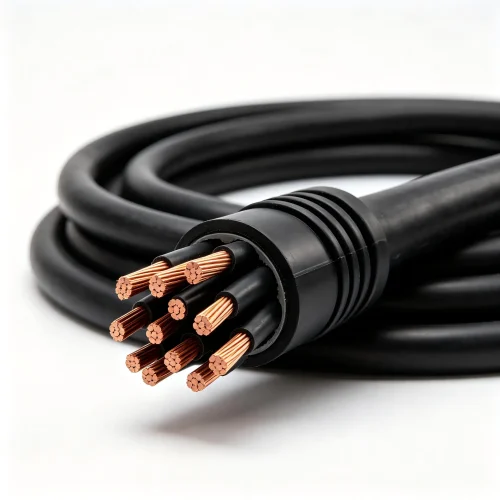
The jacket is the outermost layer of a cable. It protects the insulation, shielding, and conductors from mechanical wear, moisture, chemicals, sunlight, and flame. A jacket is not just “plastic tubing”; its compound is engineered for a specific duty cycle. The same connector or conductor rated for a clean control cabinet will fail quickly if the jacket cannot handle the temperature, flex, or chemical exposure of the actual installation.

Cable Jacket Material Comparison Table
The table below summarizes how the four common compounds behave across the properties B2B buyers care about most.
| Property | PVC | PUR (Polyurethane) | TPE (Thermoplastic Elastomer) | LSZH |
|---|---|---|---|---|
| Full name | Polyvinyl chloride | Polyurethane | Thermoplastic elastomer | Low-smoke zero-halogen |
| Temp range (typical) | -10°C to 70°C | -40°C to 80°C | -50°C to 105°C | -20°C to 90°C |
| Abrasion resistance | Fair | Excellent | Very good | Good |
| Oil / chemical | Poor–fair | Excellent | Good | Fair |
| Flex life | Limited | Excellent (drag-chain) | Very good | Good |
| Flame & smoke | Burns, dense smoke | Burns, moderate smoke | Burns, moderate smoke | Low smoke, self-extinguishing |
| Typical use | Indoor static wiring | Robotics, drag chains | Flexible & low-temp | Buildings, transit, ships |
Values are typical guidance; always confirm the exact rating on the manufacturer’s datasheet and the applicable standard.
Reading the Comparison Row by Row
PVC is the low-cost default for indoor, static wiring where movement and chemicals are absent. PUR costs more but pays back quickly in robotics and drag-chain duty where a PVC jacket would be replaced repeatedly. TPE bridges price and performance, withstanding the low temperatures that make PVC brittle and cracking. LSZH is specified not for mechanical durability but for life safety, and is often mandated by building codes rather than chosen for economics.
How Jacket Material Affects Total Cost of Ownership
The cheapest jacket is rarely the cheapest cable. A PVC assembly that fails after a few months of unintended flex generates labor, downtime, and re-certification costs that dwarf the small saving at purchase. For B2B buyers issuing recurring orders, specifying the correct material up front protects uptime and simplifies supplier qualification. Treat the jacket as a lifecycle decision, not a line-item cost.
When requesting quotes, ask suppliers to state the jacket compound, the relevant standard (such as UL 62 or IEC 60227), and the tested flex-cycle count. A confident manufacturer will provide this without hesitation; vague answers are a signal to qualify another vendor before committing volume.
How to Choose the Right Cable Jacket Material
Use the comparison above as a filter, then match the duty cycle of your application to the compound that fits.
Continuous-Flex and Drag-Chain Applications
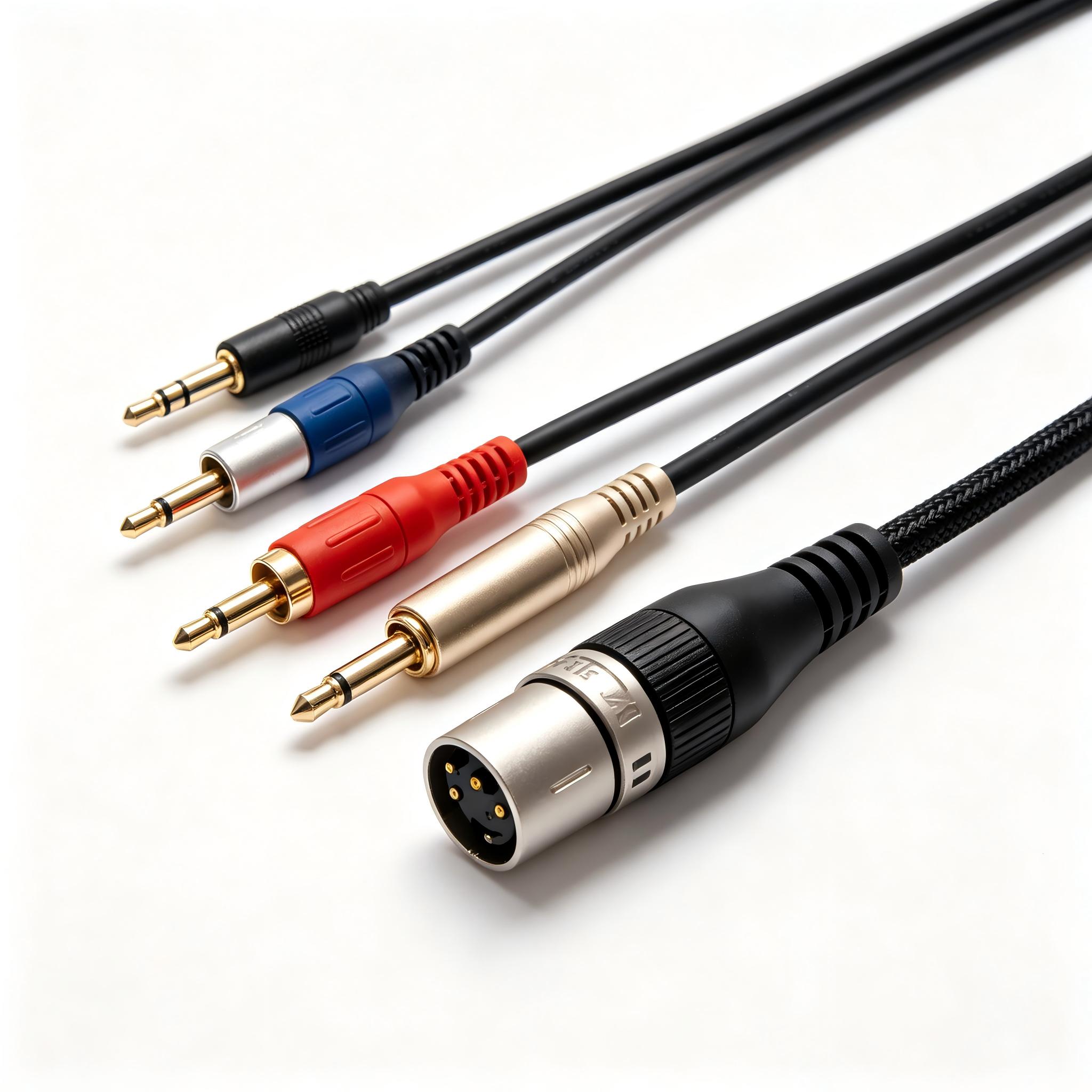
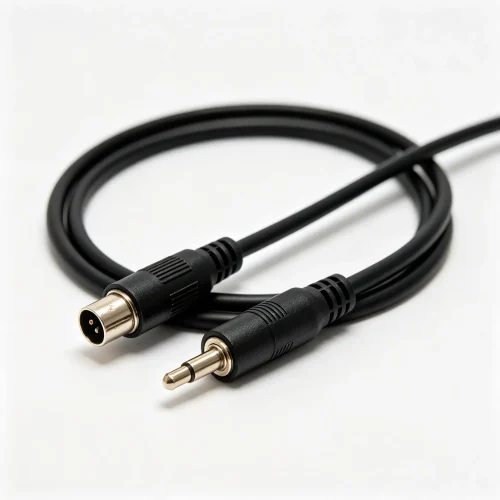
If the cable moves through millions of cycles in a cable carrier, specify PUR. Polyurethane resists the micro-abrasion and tear propagation that destroy PVC within weeks. For lower-cycle flex or cold environments, TPE is a strong alternative. Our serial and industrial communication cables are frequently built with PUR jackets for automation lines.
Outdoor, UV and Harsh-Chemical Runs
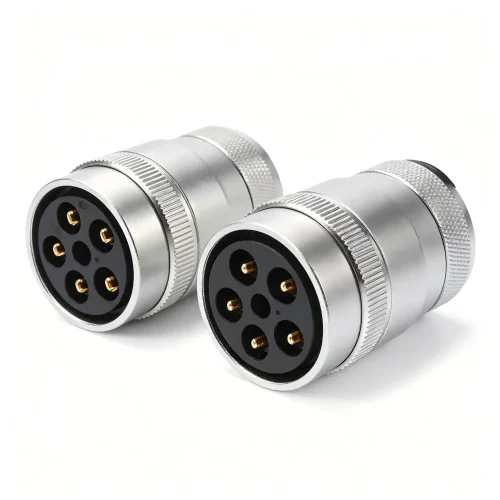
Sunlight, ozone, and solvents break down standard PVC. For outdoor trays, washdown areas, and oil-exposed machinery, choose PUR or a UV-stabilized compound. When a run also passes through a building envelope, pair it with IP-rated panel-mount waterproof connectors to keep the entry point sealed.
Confined Spaces and Public Buildings
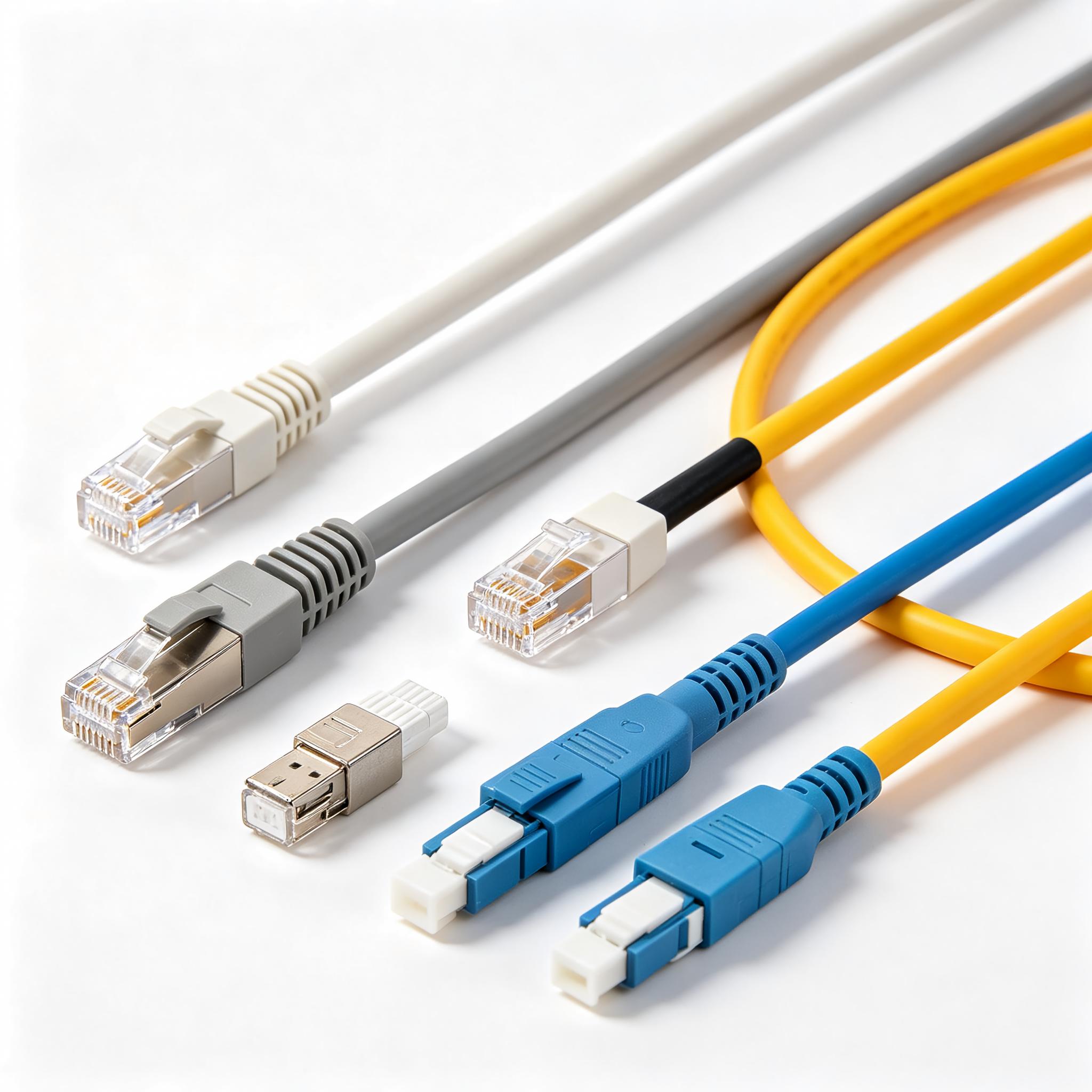
Where smoke and toxic fumes are a life-safety concern — elevators, tunnels, ships, data centers — specify LSZH. As described in references on low-smoke-zero-halogen (LSZH), these compounds emit minimal smoke and no halogen acids when exposed to fire. Our network and fiber cables are available with LSZH jackets for in-building backbone routes.
Match the Jacket to the Product Family
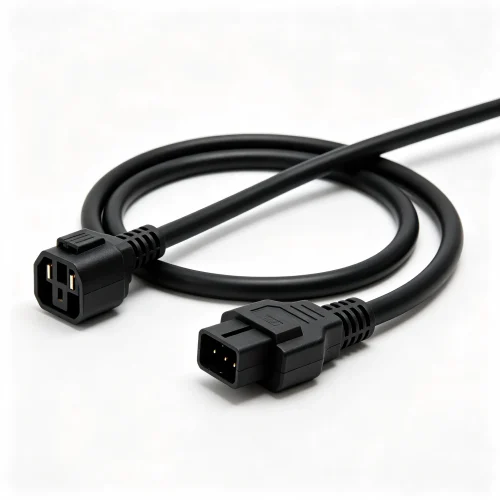
Jacket choice also depends on the product family you are sourcing. For mains and DC distribution, review our power cords and power cables with application-specific jacket options. For high-bandwidth links, our network and fiber cables support both PVC and LSZH outer jackets. And for motion control, the serial and industrial communication cables line is built for continuous flex.
Final Checklist Before You Specify
- Temperature range: note the continuous and peak temperatures, including any heat from nearby equipment.
- Motion profile: confirm whether the cable is static, flexing, or running inside a drag chain.
- Chemical exposure: list oils, solvents, and cleaning agents the jacket will contact.
- Environment: decide if the route is indoor, outdoor, or UV-exposed.
- Fire safety: check whether the installation requires LSZH or other low-smoke compliance.
- Standards: confirm which certifications apply (UL, CE, REACH, RoHS) for your market.
Get an Engineering Review
Jacket selection is rarely a single right answer — it is a trade-off between cost, flex life, and safety. Send us your duty cycle, environment, and target certification, and our team will recommend the correct cable jacket material and build a sample for testing. Contact our engineering team to start a specification review or request a quote.





















3 Responses