Choosing between solid vs stranded wire is one of the first decisions a buyer locks into a cable specification, and it quietly drives flex life, termination yield and unit cost for the whole life of a program. Specify it wrong and you pay in field returns; specify it right and the assembly disappears into the machine and simply works. This guide compares conductor construction for power and signal cables, gives you a table you can paste straight into an RFQ, and lists the checks our engineers run before quoting.
What Is Solid vs Stranded Wire?
Both options are copper conductors carrying the same current rating; the difference is how many filaments carry it. A wire conductor is called solid when it is a single drawn filament, and stranded when several filaments are twisted together into one core. Standards bodies such as IEC 60228 group stranded constructions into classes, and that class number is what a serious factory will quote against.
Solid conductor
A single piece of drawn copper. It has marginally lower DC resistance for the same cross-section, costs less to produce, and holds its shape when dressed into a panel or pushed into a terminal. Its weakness is work hardening: bend it repeatedly and it cracks. Solid wire is the default for permanent building wiring, insulation-displacement connectors and punch-down telecom blocks.
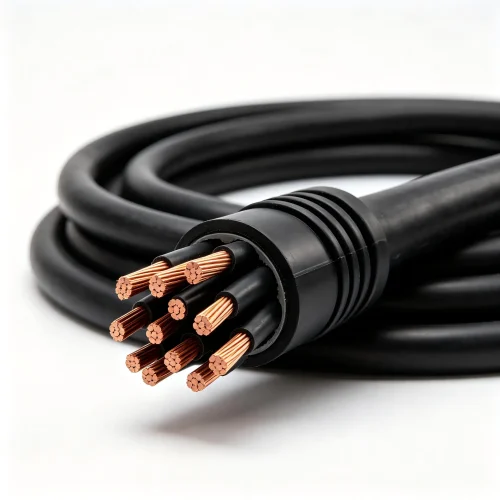
Stranded conductor
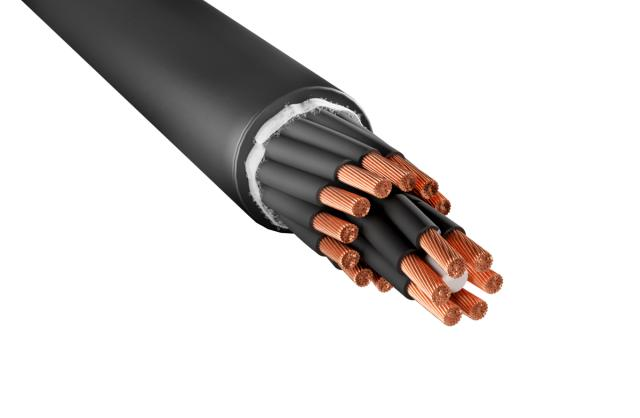
Anywhere from seven to more than two hundred thin filaments twisted in concentric layers. Stranding costs more (extra drawing and bunching operations) but distributes mechanical stress across filaments, so the core survives flexing, vibration and cable-carrier duty. IEC 60228 Class 2 is for static installation, Class 5 for occasional movement, Class 6 for continuous flexing such as drag chains and robot harnesses.
Solid vs Stranded Wire: Specification Comparison
| Attribute | Solid conductor | Stranded conductor |
|---|---|---|
| Construction | 1 filament | 7 to 200+ filaments (IEC 60228 Class 2 / 5 / 6) |
| DC resistance at equal cross-section | Baseline (lowest) | 1–4% higher (lay factor) |
| Flex life | Tens of bend cycles | 1–10 million cycles with Class 6 |
| Minimum bend radius | 8–12× overall diameter | 4–6× overall diameter |
| Unit cost | 5–15% lower | Higher (more process steps) |
| Vibration resistance | Poor — work hardens | Good — stress is distributed |
| Typical use | Fixed installs, IDC, building wire | Patch leads, moving machine parts, harnesses |
Flex Life: Where Stranded Conductor Clearly Wins
Every moving application has the same failure mode: the outer filaments of a bend see tensile stress, and a mono-filament has nowhere to shed it. In a cable carrier, a robot wrist, a handheld scanner lead or a coiled aviation mechanical keyboard cable, solid wire is a failure mechanism waiting to happen. Fine stranding plus a short lay length lets each filament migrate during the bend, which is why Class 6 conductors survive millions of cycles while solid ones fail in tens.
The practical rule we quote to customers: static installation can use Class 2 or solid; occasional handling (a patch lead that gets coiled every day) should use Class 5; continuous motion in a drag chain needs Class 6, plus a jacket and shielding combination rated for the same cycle count.
When Solid Conductor Is the Better Buy
Solid is not the inferior option — it is the right option in four situations. Permanent building and panel wiring where the run is dressed once and clamped. Insulation-displacement (IDC) connectors and punch-down blocks, whose blades are engineered to cut into a single core. Screw-terminal distribution where shape retention speeds up installation. And high-volume static runs where a 5–15% conductor saving is worth more than flex performance nobody will use.
Termination Compatibility
Conductor choice and termination method must be decided together, or you will buy a good cable and assemble a bad one.
| Termination method | Solid | Stranded | What to specify |
|---|---|---|---|
| Crimp barrel | Not recommended | Preferred | Strands fill the barrel; solid core can cold-flow and pull out |
| Solder | Suitable | Suitable | Control wicking — solder creeping up stranded wire creates a stiff stress point |
| IDC / punch-down | Required | Poor | Blades can sever filaments instead of displacing insulation |
| Screw terminal | Suitable | Needs ferrule | Always specify bootlace ferrules on stranded cores |
| Spring cage | Suitable | Suitable with ferrule | Tinned ferrule prevents filament migration over time |
How to Specify Conductor Construction in an RFQ
Vague drawings are the number one reason two suppliers quote two different cables at the same price. Put these seven lines on your RFQ and quotes become comparable:
- State cross-section and stranding: “2.5 mm², IEC 60228 Class 5” or the exact build “84 × 0.10 mm”.
- State duty cycle: static, occasional flex, or continuous flex with a target cycle count.
- State minimum bend radius and the cable-carrier manufacturer and series if the cable moves.
- State the termination method, and whether ferrules or tinned strands are required.
- State the flex-life test method and acceptance criteria, for example 1,000,000 cycles at a defined radius with resistance change under 10%.
- State conductor material: bare copper for general use, tinned copper for humid, outdoor or high-temperature environments.
- Confirm jacket, shielding and connector interface compatibility — a Class 6 core under a stiff PVC jacket will still fail early.
Common Specification Mistakes
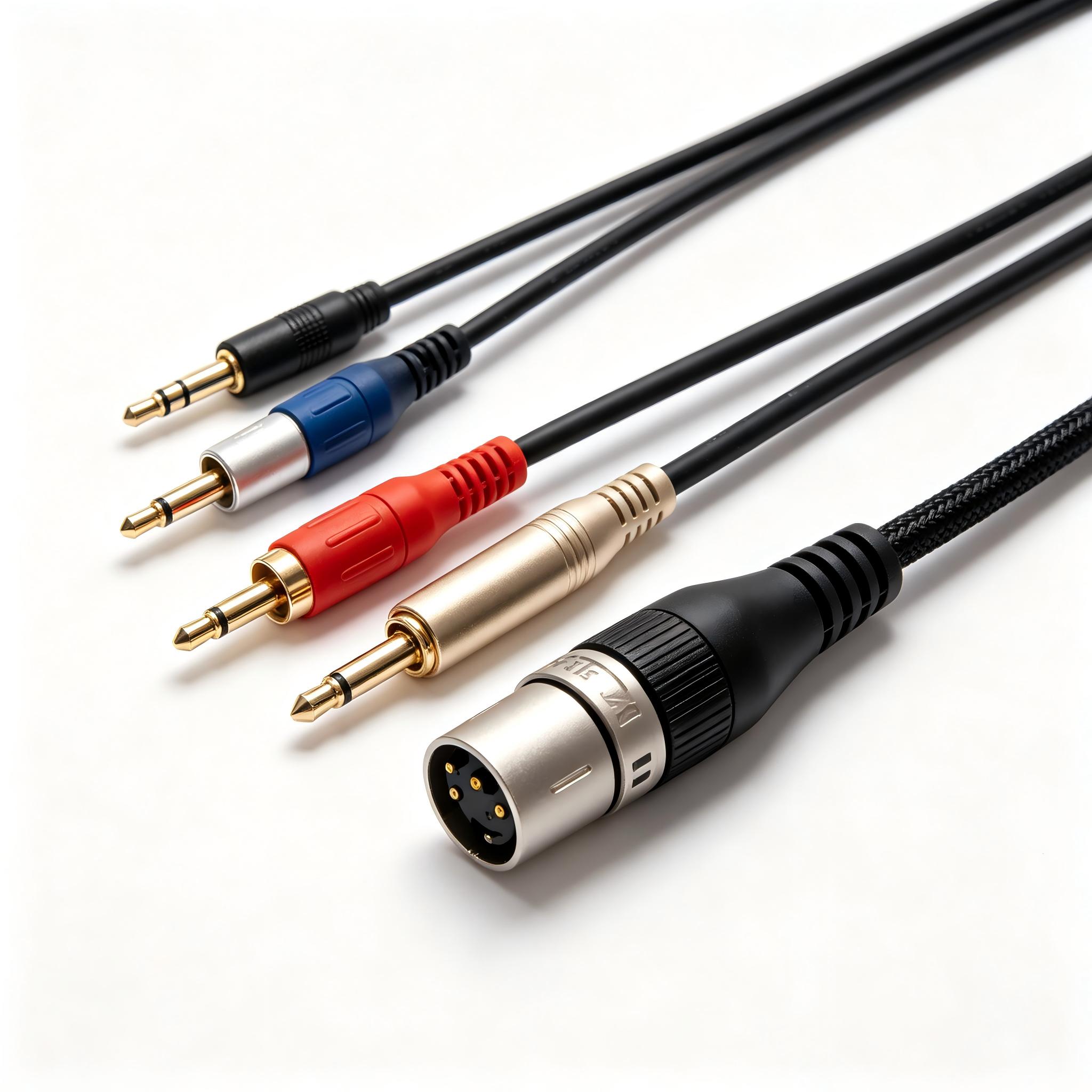
Three errors show up repeatedly in incoming RFQs. First, copying “22 AWG” with no stranding class, which invites the cheapest solid-core quote. Second, ordering fine-stranded cable for screw terminals without ferrules, producing loose connections in the field. Third, over-specifying Class 6 for a static installation and paying roughly 20% more for flex performance that will never be used. Both audio cables and serial industrial communication cables have their own sweet spot — studio patching wants flexibility, a fixed RS-485 trunk run usually does not.
Get the Conductor Right on Your Next Build
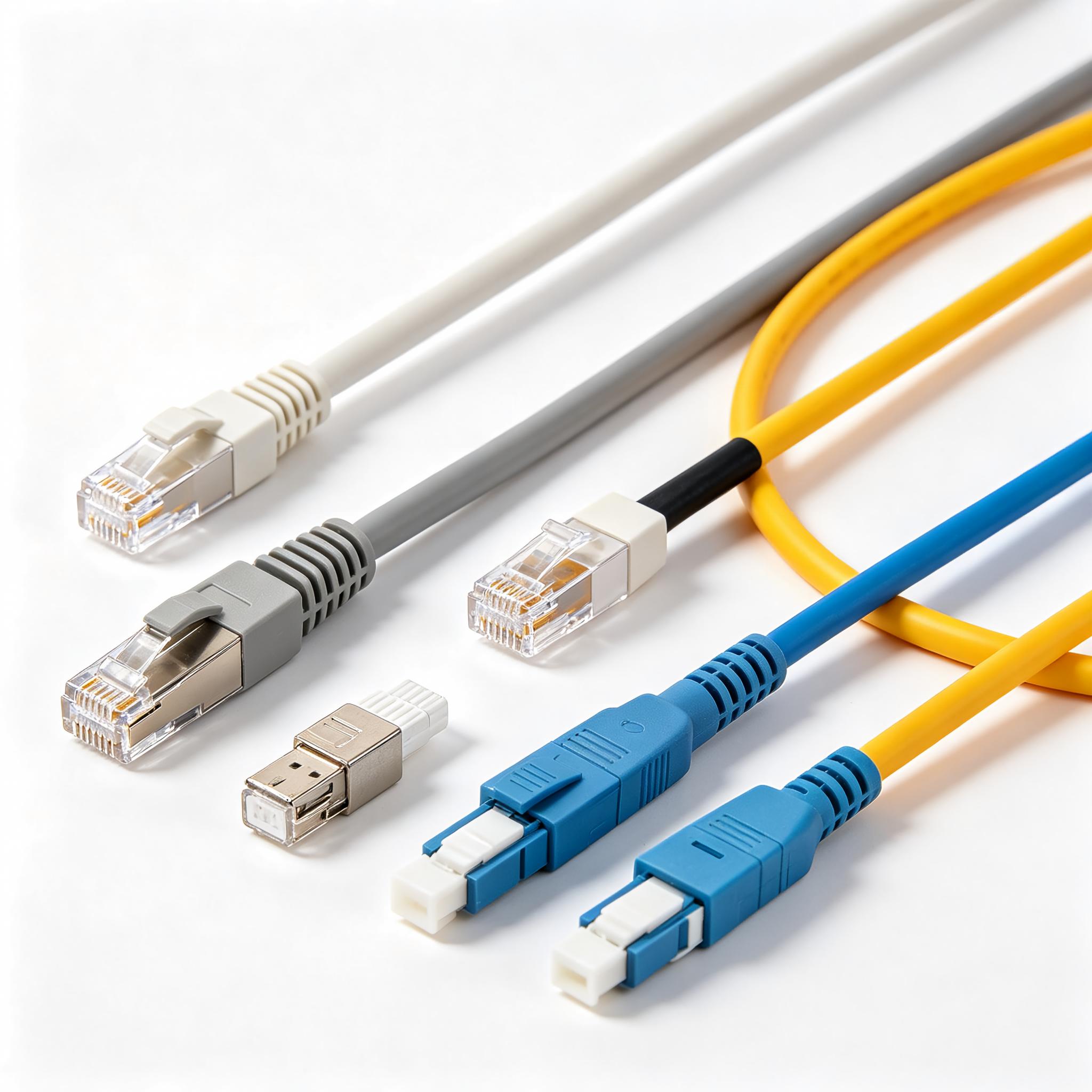
Solid vs stranded wire is a five-minute decision that protects a five-year program. Send us your cross-section, duty cycle and termination method, and we will come back with a stranding class, a flex-life estimate and a production quote. Our team builds network and fiber assemblies, panel-mount waterproof connector harnesses and custom overmolded sets for export markets. Request a quote and sample today.