

USB-C has become the default connector for laptops, smartphones, displays, and industrial devices. For procurement teams buying in volume, the label “USB-C” is not enough — the same connector ships in very different performance tiers. This guide explains what to specify and how to source reliably.
Why USB-C dominates B2B sourcing
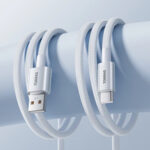
A single reversible connector now carries power, video, and data. That consolidation reduces SKU count, simplifies inventory, and meets regulations such as the EU common charger directive. For distributors and OEMs, standardizing on USB-C lowers support cost and improves compatibility.
Key specifications to specify
- Power Delivery (PD): Standard USB-C delivers 60 W (3 A). Specify USB PD 3.1 EPR up to 240 W (5 A, 48 V) for laptops, docks, and power tools.
- Data rate: USB 2.0 (480 Mbps) for charge-only; USB 3.2 Gen 2 (10 Gbps) for storage; USB4 (40 Gbps) for docks and 8K video.
- Video: Alt Mode supports DisplayPort and HDMI; USB4/Thunderbolt carries 8K@60 Hz.
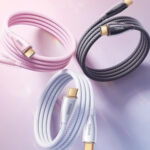
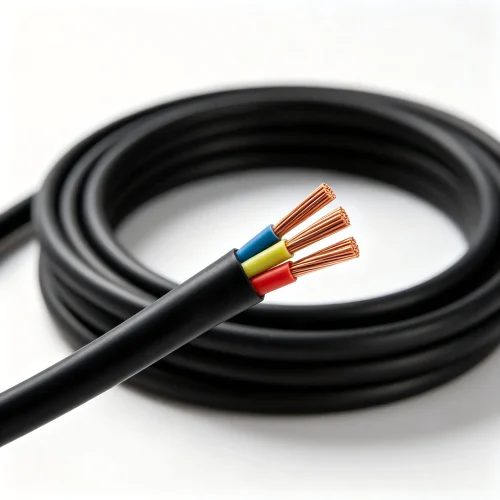
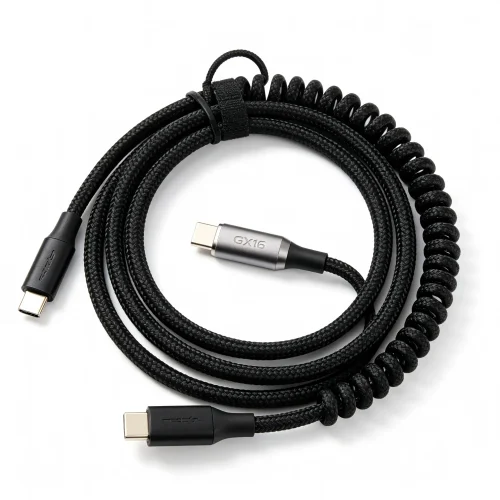
- Cable construction: 22 AWG VBUS for high current, shielded differential pairs, and 240W-rated e-marker chips.
Certifications that matter
| Mark | What it proves |
| USB-IF Certified | Passed official compliance + 240W e-marker test |
| UL / CE | Electrical safety for North America / EU |
| RoHS | Restriction of hazardous substances |
Tip: Ask suppliers for the USB-IF TID number. Uncertified “240W” cables often lack the e-marker and will throttle or fail.
How to vet a USB-C cable manufacturer
- Certifications on file — UL, CE, ISO 9001, RoHS, and ideally USB-IF.
- Engineering support — can they build to your drawing and run signal-integrity tests?
- Traceability — lot coding, incoming-inspection records, and PPAP for automotive/tier-1.
- Capacity — MOQ, lead time, and whether they run their own molding and braiding.
SYY Cable (Shenzhen Shiyueyun Technology Co., Ltd. Technology Co., Ltd.), established in 2015 with 50+ staff in Shenzhen, supplies USB-C cables from 60 W charge-only to 240 W EPR and USB4 40 Gbps, with UL, CE, ISO 9001, and RoHS compliance and drawing-based OEM/ODM assembly.
OEM / ODM considerations
For private-label programs, confirm cable length options, jacket material (TPE/PVC/braided), connector plating (nickel vs gold), and custom packaging. Typical MOQ for custom USB-C assemblies starts around 500–1,000 pcs; lead time 2–4 weeks after sample approval.
常见问题解答
Q: How much power can a USB-C cable carry? A: Up to 240 W using USB PD 3.1 EPR with a 5 A cable and e-marker chip. Standard cables are rated 60 W (3 A).
Q: What does USB-IF certification guarantee? A: The cable passed official compliance tests, including the 240 W e-marker verification, so it will not overdraw or misreport power.
Q: What is the typical MOQ for custom USB-C cables? A: Most Shenzhen OEM factories, including SYY Cable, start custom USB-C assemblies at roughly 500–1,000 pcs with 2–4 week lead time after approved samples.
Talk to an engineer
Need a USB-C cable built to your spec? Contact SYY Cable at www.syycable.com or email info@syycable.com for a drawing-based quote.













2 回复